
Ключевые принципы
- Гибкость и адаптация к изменениям
- Прозрачность и открытая коммуникация
- Совместная работа и распределение ролей
Применение
В бизнесе, образовании и общественных проектах ап х помогает ускорить принятие решений и улучшить качество сотрудничества.
| Область | Пример |
|---|---|
| Команды | совместные платформы и каналы |
| Проекты | итеративная разработка и ап х обратная связь |
ЧаВо
Вопрос: Что означает Ап х?
Ответ: Условная концепция гибкости и сотрудничества.
Вопрос: Где применяется?
Ответ: В компаниях, проектах и образовательной среде.
Вопрос: Как начать внедрять?
Ответ: Определить цели, выбрать инструменты, начать с малого.
]]>Who Founded YouTube?
YouTube was founded by three former PayPal employees: Chad Hurley, Steve Chen, and Jawed Karim. They combined product thinking, engineering skills, and a clear user goal: create a website where anyone could upload a video and watch it instantly in a browser.
- Chad Hurley — product/design focus and early CEO role
- Steve Chen — engineering and infrastructure
- Jawed Karim — engineering and early concept support
The Problem YouTube Solved
At the time, sharing video often meant emailing huge files or dealing with complicated players and downloads. YouTube made video:
- Uploadable by non-experts (simple interface)
- Streamable in the browser (no special setup)
- Sharable through links and embedding on other sites
Early Growth and the First Video
YouTube launched publicly in 2005. One of the most famous early moments was the first uploaded video, “Me at the zoo,” featuring co-founder Jawed Karim. The clip was short and casual—exactly the kind of everyday content that proved the platform’s big idea: ordinary people could publish video without needing a studio.
Key Milestones Timeline
| 2005 | YouTube is founded and launches | Introduced easy browser-based video sharing |
| 2005 | “Me at the zoo” is uploaded | Became a symbol of user-generated video culture |
| 2006 | Google acquires YouTube | Provided resources to scale hosting and global reach |
Why Google Bought YouTube
By 2006, YouTube’s traffic was exploding. Video hosting is expensive—bandwidth and storage costs rise fast when millions of people watch content daily. Google’s acquisition gave YouTube the infrastructure and advertising ecosystem to grow into a sustainable business.
What YouTube’s Founding Changed
YouTube didn’t just create a popular website; it reshaped how people learn, entertain themselves, and build careers online. Its founding helped accelerate:
- Creator-driven media and influencer culture
- How-to education and free tutorials at massive scale
- Music discovery, commentary, and global community trends
From a small startup idea to a global video powerhouse, YouTube’s founding is a classic example of a simple product solving a real problem—and changing the internet in the process.
]]> Где и как **1 upx скачать** бесплатно?
Если вы ищете удобный и быстрый способ сжатия файлов, то программа UPX — отличный выбор. В этой статье мы расскажем, где и как **1 upx скачать** без лишних хлопот, а также поделимся полезными советами.
]]>Обзор стратегии https UPX на сайте ru
Что такое https upx strategy ru сайт? 
]]>Julius Caesar (100 BC – 44 BC) was one of the most influential figures in the history of the ancient world. A brilliant military commander, cunning politician, and gifted writer, he transformed the Roman Republic into what would eventually become the Roman Empire.
Early Life
Gaius Julius Caesar was born on July 13, 100 BC, into a patrician family in Rome. Despite his noble origins, his family was not particularly wealthy or politically powerful at the time. From an early age, Caesar showed exceptional intelligence and ambition. He studied rhetoric and philosophy, skills that would later make him one of Rome’s greatest orators.
Rise to Power
Caesar’s political career began in earnest in his early thirties. He formed a powerful alliance known as theFirst Triumvirate with two of Rome’s most powerful men — Pompey, the celebrated general, and Crassus, the wealthiest man in Rome. This partnership allowed Caesar to gain the consulship in 59 BC, one of the highest offices in the Roman Republic.
Military Campaigns
Perhaps Caesar’s greatest achievements came on the battlefield. His conquest of Gaul (modern-day France and Belgium) between 58 and 50 BC is considered one of the most remarkable military campaigns in history. Over nearly a decade of fighting, Caesar’s legions defeated numerous Celtic tribes and brought vast new territories under Roman control.
He also conducted two expeditions to Britain in 55 and 54 BC — the first Roman general to do so — and famously crossed the Rhine River into Germanic territory, demonstrating Rome’s military reach beyond its known borders.
Crossing the Rubicon
In 49 BC, Caesar made one of the most consequential decisions in world history. Ordered by the Senate to disband his army, he instead crossed theRubicon River with his troops — a direct act of defiance that triggered a civil war. The phrase “crossing the Rubicon” has since become a universal expression for making an irreversible decision.
After defeating his rival Pompey and his supporters across multiple campaigns from Spain to Egypt to Asia Minor, Caesar emerged as the undisputed master of the Roman world.
Dictator of Rome
By 44 BC, Caesar had been declared dictator perpetuo — dictator in perpetuity. He implemented sweeping reforms: restructuring the calendar (giving us the Julian calendar, still the basis of our modern one), reducing debt, expanding citizenship, and improving the administration of Rome’s provinces.
Assassination
Despite — or perhaps because of — his immense power, Caesar made powerful enemies. OnMarch 15, 44 BC, known as the Ides of March, a group of senators led by Marcus Junius Brutus and Gaius Cassius Longinus assassinated him in the Theatre of Pompey. He was stabbed 23 times.
The assassins believed they were saving the Republic. Instead, Caesar’s death plunged Rome into years of civil war and ultimately led to the rise of his adopted son Octavian as Augustus, the first Roman Emperor.
Legacy
Julius Caesar’s legacy is immeasurable. His name became a title — Kaiser in German, Tsar in Russian — synonymous with supreme power. He reformed the calendar, reshaped the Roman state, and inspired countless works of art, literature, and political thought across two millennia.
William Shakespeare immortalized him in his famous play Julius Caesar, and his own writings — particularly Commentarii de Bello Gallico — remain studied to this day as masterpieces of Latin prose and military history.
As we reflect on his life on March 24, 2026, Julius Caesar remains a towering figure — a man whose ambition, genius, and fate continue to captivate the imagination of the world more than 2,000 years after his death.
“Veni, vidi, vici” — I came, I saw, I conquered.
— Julius Caesar
]]>Julius Caesar (100 BC – 44 BC) was one of the most influential figures in the history of the ancient world. A brilliant military commander, cunning politician, and gifted writer, he transformed the Roman Republic into what would eventually become the Roman Empire.
Early Life
Gaius Julius Caesar was born on July 13, 100 BC, into a patrician family in Rome. Despite his noble origins, his family was not particularly wealthy or politically powerful at the time. From an early age, Caesar showed exceptional intelligence and ambition. He studied rhetoric and philosophy, skills that would later make him one of Rome’s greatest orators.
Rise to Power
Caesar’s political career began in earnest in his early thirties. He formed a powerful alliance known as theFirst Triumvirate with two of Rome’s most powerful men — Pompey, the celebrated general, and Crassus, the wealthiest man in Rome. This partnership allowed Caesar to gain the consulship in 59 BC, one of the highest offices in the Roman Republic.
Military Campaigns
Perhaps Caesar’s greatest achievements came on the battlefield. His conquest of Gaul (modern-day France and Belgium) between 58 and 50 BC is considered one of the most remarkable military campaigns in history. Over nearly a decade of fighting, Caesar’s legions defeated numerous Celtic tribes and brought vast new territories under Roman control.
He also conducted two expeditions to Britain in 55 and 54 BC — the first Roman general to do so — and famously crossed the Rhine River into Germanic territory, demonstrating Rome’s military reach beyond its known borders.
Crossing the Rubicon
In 49 BC, Caesar made one of the most consequential decisions in world history. Ordered by the Senate to disband his army, he instead crossed theRubicon River with his troops — a direct act of defiance that triggered a civil war. The phrase “crossing the Rubicon” has since become a universal expression for making an irreversible decision.
After defeating his rival Pompey and his supporters across multiple campaigns from Spain to Egypt to Asia Minor, Caesar emerged as the undisputed master of the Roman world.
Dictator of Rome
By 44 BC, Caesar had been declared dictator perpetuo — dictator in perpetuity. He implemented sweeping reforms: restructuring the calendar (giving us the Julian calendar, still the basis of our modern one), reducing debt, expanding citizenship, and improving the administration of Rome’s provinces.
Assassination
Despite — or perhaps because of — his immense power, Caesar made powerful enemies. OnMarch 15, 44 BC, known as the Ides of March, a group of senators led by Marcus Junius Brutus and Gaius Cassius Longinus assassinated him in the Theatre of Pompey. He was stabbed 23 times.
The assassins believed they were saving the Republic. Instead, Caesar’s death plunged Rome into years of civil war and ultimately led to the rise of his adopted son Octavian as Augustus, the first Roman Emperor.
Legacy
Julius Caesar’s legacy is immeasurable. His name became a title — Kaiser in German, Tsar in Russian — synonymous with supreme power. He reformed the calendar, reshaped the Roman state, and inspired countless works of art, literature, and political thought across two millennia.
William Shakespeare immortalized him in his famous play Julius Caesar, and his own writings — particularly Commentarii de Bello Gallico — remain studied to this day as masterpieces of Latin prose and military history.
As we reflect on his life on March 24, 2026, Julius Caesar remains a towering figure — a man whose ambition, genius, and fate continue to captivate the imagination of the world more than 2,000 years after his death.
“Veni, vidi, vici” — I came, I saw, I conquered.
— Julius Caesar
]]> Где и как **1 upx скачать** бесплатно?
Если вы ищете удобный и быстрый способ сжатия файлов, то программа UPX — отличный выбор. В этой статье мы расскажем, где и как **1 upx скачать** без лишних хлопот, а также поделимся полезными советами.
 Почему стоит выбрать UPX?
 Мощное сжатие исполняемых файлов
 Быстрая работа без потери функциональности
 Легко интегрируется в рабочие процессы разработчиков
 Поддержка различных форматов и платформ
]]>
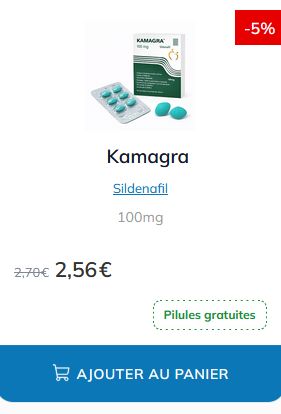
Bienvenue! Je suis le Dr Jean-Marc Dubois, spécialiste en médecine sexuelle et en santé masculine. Aujourd’hui, je souhaite vous guider dans votre démarche pour acheter du Kamagra en France en toute sécurité, à moindre coût, et sans ordonnance. De nos jours, de nombreux hommes recherchent des solutions efficaces pour améliorer leur performance sexuelle, et les plateformes en ligne offrent une option pratique pour se procurer des médicaments tels que le Kamagra. Cependant, il est essentiel de connaître les bonnes pratiques, les précautions à prendre, ainsi que les différences entre les différents vendeurs et produits. Ce guide vous fournira toutes les informations nécessaires pour faire un achat éclairé et sécurisé dans le respect de votre santé.
Introduction : Pourquoi acheter du Kamagra en ligne?
Le Kamagra est un médicament utilisé pour traiter la dysfonction érectile. Il contient du sildenafil, le même principe actif que le Viagra, mais souvent à un prix plus abordable. En France, la réglementation sur la vente de médicaments est très stricte, ce qui complique souvent l’achat en pharmacie traditionnelle sans ordonnance. C’est dans cette optique que de nombreux hommes se tournent vers les pharmacies en ligne, où l’on peut souvent acheter du Kamagra sans prescription, à condition de choisir un vendeur fiable.
Voici quelques avantages d’acheter du Kamagra en ligne :
- Prix souvent plus bas que dans les pharmacies physiques

- Commande discret : livraison à domicile

- Pas besoin d’ordonnance, sous réserve de choisir une plateforme fiable


- Large choix de dosages et de formulaires

- Gain de temps : pas besoin de se déplacer

Cependant, il existe aussi des risques si l’on ne choisi pas un vendeur sérieux : produits contrefaits, mauvaises doses, absence de contrôle de qualité. C’est pourquoi je vous recommande de bien vérifier la réputation des pharmacies en ligne et de privilégier celles qui proposent des conseils, une transparence sur l’origine des produits, et des garanties de qualité.
Comparaison des prix, dosages et pharmacies en ligne
Tableau comparatif des principaux vendeurs de Kamagra en France
| Pharmacie en ligne | Prix pour 30 comprimés | Dosages disponibles | Détail |
|---|---|---|---|
| OnlinePharma | €39.99 | 50 mg, 100 mg | Vente sans ordonnance, livraison rapide |
| MedicExpress | €42.50 | 25 mg, 50 mg | Qualité contrôlée, livraison discrète |
| SafeMedic | €37.75 | 50 mg | Prix compétitif, garantie d’authenticité |
| QuickHealth | €45.00 | 25 mg, 50 mg, 100 mg | Service client réactif, consultation en ligne possible |
Précisions sur les dosages de Kamagra
- 25 mg : Dose adaptée aux débutants ou à une faible expérience avec sildenafil.
- 50 mg : Dose standard pour la majorité des hommes.
- 100 mg : Dose forte, à utiliser avec précaution et uniquement si tolérée.
Comment choisir la bonne pharmacie en ligne?
Critères de sélection
 **Certifications et licences** : Vérifiez si la pharmacie possède les licences appropriées pour la vente en ligne.
 **Sécurité et confidentialité** : La plateforme doit utiliser le cryptage SSL pour protéger vos données personnelles.
 **Transparence sur l’origine** des médicaments : Provenance claire, contrôle qualité.
 **Options de livraison** : Livraison discrète, rapide, et fiable.
 **Support client** : disponibilité pour répondre à vos questions.
Les risques d’acheter à des vendeurs peu fiables
- Produits falsifiés ou contrefaits pouvant être inefficaces ou dangereux.
- Médicaments périmés ou mal stockés.
- Frais cachés ou arnaques financières.
- Absence de contrôle de qualité, risques pour votre santé.
Procédure pour commander du Kamagra en ligne
Étapes à suivre
 Recherchez une pharmacie en ligne fiable en vérifiant les critères ci-dessus.
 Sélectionnez le dosage souhaité (25 mg, 50 mg, 100 mg).
 Ajoutez la quantité désirée au panier.
 Complétez le formulaire avec vos coordonnées, en assurant la confidentialité.
- Choisissez le mode de livraison adapté à vos besoins.
 Effectuez le paiement via un mode sécurisé.
- Recevez votre commande à domicile, de manière discrète.
Questions fréquentes (FAQ)
Est-ce légal d’acheter du Kamagra sans ordonnance en France?
En France, la vente de médicaments tels que le sildenafil (contenu dans Kamagra) est réglementée. Cependant, l’achat en ligne à partir de sites fiables, qui respectent la législation sur la vente à distance, permet souvent d’acheter sans ordonnance. Il est toutefois conseillé d’avoir un avis médical pour assurer la sécurité et éviter tout risque d’interactions ou d’effets indésirables.
Le Kamagra est-il sûr?
Consommer du Kamagra provenant d’une source fiable, contrôlée et conforme aux normes sanitaires est généralement sans danger si vous n’avez pas de contre-indications. Évitez les produits contrefaits ou achetés sur des sites douteux, qui peuvent contenir des substances nocives ou être inefficaces.
Quels sont les effets secondaires possibles?
- Mal de tête

- Rougeur du visage
- Indigestion
- Étourdissements
En cas d’effets indésirables importants ou prolongés, consultez rapidement un professionnel de santé.
Puis-je acheter en toute discrétion?
Oui, la plupart des pharmacies en ligne proposent une livraison discrète, sans indication sur le contenu de l’enveloppe.
Combien de temps faut-il pour recevoir la commande?
La livraison dépend du site choisi, mais elle varie généralement entre 24 et 72 heures en France.
Conseils pour un usage sécurisé du Kamagra
- Respectez la dose recommandée.
- Ne prenez pas Kamagra si vous prenez déjà d’autres médicaments pour la dysfonction ou si vous avez certaines pathologies (p. ex., problèmes cardiaques).
- Évitez la consommation d’alcool lors de l’utilisation.
- Consultez un médecin en cas de doute ou si vous avez des effets indésirables.
Conclusion
Le marché en ligne offre une possibilité pratique et souvent économique pour acheter du Kamagra en France. Toutefois, la priorité doit toujours être la sécurité et la qualité des produits. En suivant les conseils décrits dans ce guide, vous pouvez effectuer votre achat en toute confiance, tout en respectant votre santé. N’oubliez pas que la consultation d’un professionnel de santé est toujours recommandée pour un usage optimal et sécurisé.
Si vous avez d’autres questions ou besoin d’une assistance personnalisée, n’hésitez pas à me contacter ou à consulter un spécialiste qualifié.
]]>